Getting Ahead of the Returns Surge: How Pre-Positioned Storage Capacity Converts Q4 Disruption Into Operational Advantage
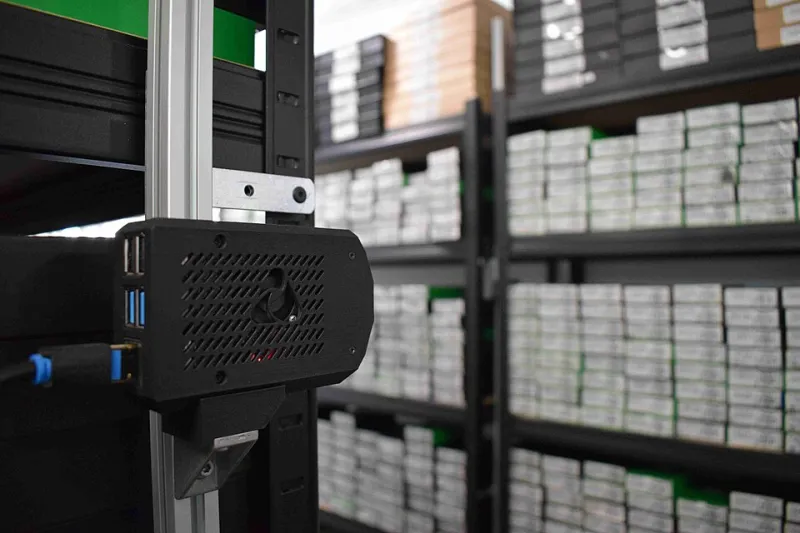
Photo: Adapta Robotics, CC BY-SA 4.0, via Wikimedia Commons
The Timing Paradox of Q4 Returns
The American retail and B2B distribution calendar contains a well-documented paradox: the period of highest outbound shipping volume—October through December—is immediately followed by the period of highest inbound return volume. Every operator knows this. Most still handle it reactively.
The reactive approach has a familiar profile. Warehouse space contracted for outbound fulfillment begins filling with returned goods in January. Overflow is addressed through emergency third-party logistics arrangements negotiated under time pressure at premium rates. Returned products sit in suboptimal conditions—often in temporary or uncontrolled environments—while disposition decisions are delayed. By February, operations teams are managing a backlog that will not clear until March, and the financial damage has already been done.
The alternative—pre-positioning storage capacity before the return surge arrives—is not a novel concept. But the analytical rigor required to execute it well has historically been beyond the reach of mid-market operators. That is changing, and the businesses adopting this approach are creating a measurable competitive separation from those that have not.
What the Data Actually Shows About Return Seasonality
Return volume in Q1 is not random. It is, to a significant degree, predictable—and the predictability increases with each year of operational history a business accumulates.
Historical return data from B2B distribution operations consistently reveals several patterns that are actionable for storage planning purposes. First, return volume in January and February correlates strongly with outbound shipment volume in November and December, with a lag of approximately three to six weeks depending on product category and customer segment. Second, return rates by SKU are relatively stable year over year, with meaningful variance driven primarily by product changes, carrier performance shifts, and market-level disruptions. Third, the geographic distribution of returns mirrors the geographic distribution of outbound shipments, which means that storage capacity needs can be modeled by region rather than managed centrally.
Taken together, these patterns mean that a business with two or more years of return history can construct a reasonably accurate forecast of Q1 storage demand by October—well before the holiday outbound surge begins.
The Pre-Positioning Model in Practice
Pre-positioning storage capacity does not necessarily mean securing dedicated warehouse space months in advance. For most mid-market operators, the more practical model involves three coordinated actions.
Reserve Flexible Overflow Agreements Early
Third-party warehouse operators and logistics providers offer substantially better rates on flexible storage agreements when those agreements are negotiated in September and October rather than January. Demand for overflow storage spikes sharply in Q1, and providers adjust pricing accordingly. Businesses that secure flexible capacity agreements before the holiday season—specifying a range of space rather than a fixed footprint—lock in favorable terms without committing to volume they may not need.
Designate Internal Return Processing Zones in Advance
One of the most significant contributors to post-return handling costs is the absence of a defined processing workflow. When returned goods arrive without a designated receiving area, inspection protocol, or disposition pathway, they accumulate in whatever space is available. Product condition deteriorates. Resalable inventory mingles with unsalable inventory. Labor costs increase as workers sort through unorganized returns rather than processing them systematically.
Designating a returns processing zone before the surge—complete with staffing assignments, condition grading criteria, and disposition routing—reduces handling costs per unit by a margin that consistently exceeds the cost of the advance planning itself.
Integrate Return Forecasts Into Inventory Replenishment Schedules
A significant portion of returned goods in B2B distribution are resalable after inspection and light reconditioning. Operators who treat these items as unplanned additions to available inventory—rather than anticipated inputs to the replenishment cycle—miss the opportunity to reduce new purchase orders and free up working capital.
Building return forecasts into inventory planning software, even at a rough approximation, allows procurement teams to delay or reduce inbound purchase orders for SKUs likely to return in volume. The capital freed by this adjustment is not trivial. In documented cases involving mid-size industrial distributors, proactive return-to-inventory planning reduced new procurement spending in Q1 by between six and eleven percent.
The Competitive Separation That Emerges
The financial benefits of pre-positioned storage capacity are real and measurable. Emergency warehousing rates in Q1 typically run thirty to fifty percent above contracted rates secured in Q4. Product condition losses from suboptimal storage environments—temperature fluctuation, compression damage from improper stacking, moisture exposure in temporary facilities—can render otherwise resalable inventory unsalable, effectively converting a return into a write-off.
But the more durable competitive advantage is operational. Businesses that process returns quickly and cleanly can reintroduce product to available inventory faster, fulfill backorders from returned stock rather than new production, and communicate accurate availability timelines to customers. In B2B relationships, where procurement officers are tracking vendor reliability as closely as they track price, the ability to turn around a return in days rather than weeks is a meaningful differentiator.
Conversely, operators whose Q1 operations are visibly chaotic—delayed return acknowledgments, unclear credit timelines, inability to confirm product disposition—signal to their customers that the vendor relationship carries hidden operational risk. That signal compounds over time.
Sustainability as a Secondary Dividend
There is an environmental dimension to this conversation that is increasingly relevant to B2B procurement decisions. Reactive return handling generates excess packaging waste, unnecessary secondary shipments, and higher per-unit transportation emissions as products are moved between unplanned facilities. Pre-positioned returns processing, by contrast, concentrates handling, reduces redundant transportation, and creates conditions in which reconditioning and resale—rather than disposal—become the default outcome for returned goods.
For businesses operating under corporate sustainability commitments or responding to customer ESG inquiries, the ability to demonstrate a structured, low-waste reverse logistics program has tangible value in procurement conversations.
Planning Windows Are Closing
The window for securing favorable pre-positioned storage arrangements for Q1 returns opens in late summer and closes as the holiday outbound surge begins in earnest. Operators who initiate this planning in September and October have access to a substantially different set of options—and a substantially different cost structure—than those who begin in December or January.
The math of reactive versus proactive storage management is not complicated. The businesses that run it consistently choose to act earlier.