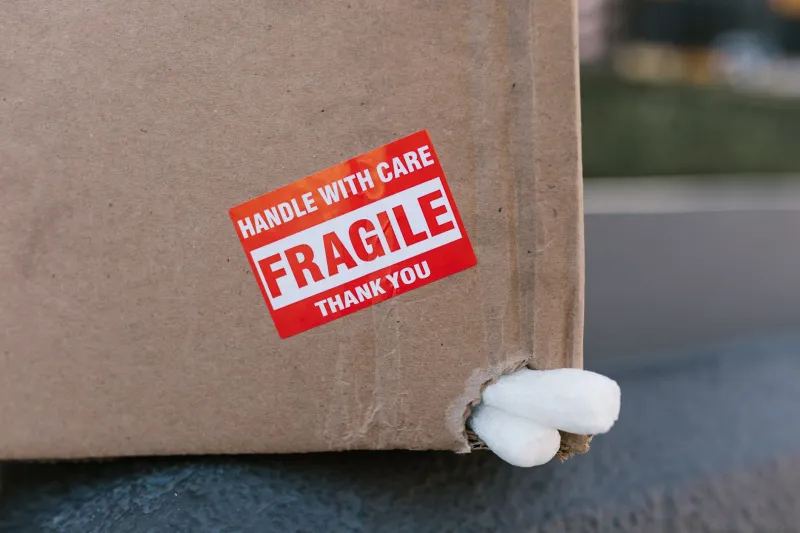
One Missed Label, One Million Problems: How Federal Packaging Compliance Gaps Trigger Costly Return Cascades

The Compliance Assumption That Costs Businesses Millions
Most B2B shippers have a general awareness that packaging compliance exists. They know there are rules. They assume their team is handling it. And therein lies the problem.
Assumption is not a compliance strategy. Across US logistics operations, the gap between what federal packaging regulations require and what businesses actually verify before shipping is wider than most finance and operations leaders realize—and the consequences of that gap are rarely limited to a single incident. When a compliance failure surfaces, it rarely arrives alone.
This article examines the federal regulatory landscape that B2B shippers most commonly underestimate, documents the cascading effects of a single missed requirement, and offers a practical checklist framework to help operations teams close the gap before a rejection notice does it for them.
The Regulatory Landscape Most Operations Teams Underestimate
Three federal frameworks generate the majority of compliance-related packaging disputes in B2B commerce.
The Consumer Product Safety Improvement Act (CPSIA) governs labeling and material safety requirements for a broad range of consumer goods—including many products sold through wholesale and distribution channels. Businesses shipping children's products, furniture, electronics accessories, and certain textiles must meet specific labeling standards, including tracking label requirements that identify the manufacturer, production batch, and country of origin. Distributors who assume this is a manufacturer-side obligation frequently discover, at the point of retail receipt, that the obligation travels with the product—not just its point of origin.
Department of Transportation (DOT) hazardous materials packaging regulations apply to a far wider category of goods than most shippers acknowledge. Industrial cleaning supplies, lithium battery-containing devices, aerosol products, and certain adhesives all fall under DOT hazmat classification tiers. The packaging requirements—including specific container construction standards, inner packaging configurations, and outer box markings—are not suggestions. Carriers who identify non-compliant hazmat packaging during transit can refuse delivery, quarantine the shipment, and assess significant fines. The shipper of record bears primary liability.
FDA packaging guidelines affect food-grade products, dietary supplements, medical devices, and cosmetics—all categories with active B2B distribution networks. Tamper-evident packaging requirements, specific labeling content mandates, and restrictions on packaging materials that may contact food or skin are frequently misapplied or inconsistently enforced across a company's SKU catalog.
The Cascade Effect: A Documented Pattern
The term "cascade" is deliberate. A single compliance failure does not produce a single problem. It produces a sequence.
Consider the experience of a mid-sized distributor of consumer electronics accessories operating out of a fulfillment center in the Midwest. The company shipped a large wholesale order to a regional retail chain—approximately 4,200 units of a Bluetooth audio product. The product contained lithium batteries. The outer cartons lacked the required DOT lithium battery handling marks, and the inner packaging did not meet the required watt-hour documentation standard.
The retail chain's receiving department flagged the shipment during inbound inspection. The entire order was refused and returned freight-collect. The distributor now faced the return freight cost, the cost of repackaging all 4,200 units at a third-party facility, a re-delivery charge, and a delayed payment cycle that pushed the invoice past the retail chain's quarterly close. The total operational cost of the compliance gap exceeded $38,000—on a shipment with a gross margin of roughly $22,000.
The cascade did not stop there. The delay triggered a secondary inventory problem: the retail chain had already allocated shelf space for the product and, unable to fill it, sourced a competing product from another distributor. The relationship damage was not quantified in any invoice, but it was real.
This pattern—rejection, return freight, repackaging, re-delivery, delayed payment, relationship strain—is not unique to this case. It is the standard progression of a compliance failure in a B2B shipping context.
Why Compliance Shortcuts Happen
The root causes of packaging compliance failures are largely structural rather than intentional. Three patterns emerge consistently.
SKU proliferation without compliance tracking. As product catalogs expand, the compliance requirements attached to each SKU multiply. Without a system that links packaging specifications to regulatory requirements at the SKU level, new products are frequently shipped in packaging configurations that were designed for a different product category.
Supplier-side assumption. Businesses that source packaged goods from manufacturers often assume that the supplier has handled all compliance requirements. In many cases, the manufacturer has met the requirements for the product itself—but not for the downstream shipping configuration assembled by the distributor.
Infrequent regulatory review. Federal packaging regulations are not static. DOT updates its hazardous materials table. FDA issues revised guidance on food-contact materials. CPSIA enforcement priorities shift. Businesses that conducted a compliance review two or three years ago may be operating on outdated assumptions.
A Practical Compliance Checklist Framework
The following framework is not a substitute for legal counsel or a formal compliance audit, but it provides an operational foundation for reducing exposure.
Step 1: Classify every active SKU against the three primary regulatory frameworks. Does the product contain lithium batteries, hazardous materials, or regulated chemicals? Is it subject to CPSIA tracking label requirements? Does it fall under FDA jurisdiction? This classification should be documented and attached to the SKU record.
Step 2: Map packaging specifications to regulatory requirements. For each regulated SKU, document the specific packaging requirements that apply—including container construction standards, required markings, labeling content, and inner packaging configurations.
Step 3: Verify carrier acceptance criteria. Major US carriers—UPS, FedEx, USPS, and LTL providers—each maintain their own acceptance standards for regulated goods. These standards sometimes exceed federal minimums. Confirm that your packaging meets the carrier's requirements, not only the regulatory baseline.
Step 4: Establish a regulatory update review cycle. Assign responsibility for monitoring regulatory changes affecting your product categories. A quarterly review of relevant agency guidance pages is a minimum threshold.
Step 5: Conduct receiving-side audits on inbound packaged goods. If your operation receives pre-packaged goods from suppliers and ships them onward, institute a compliance check at inbound receipt rather than at outbound staging. Catching a non-compliant shipment before it enters your fulfillment cycle costs significantly less than catching it at a customer's receiving dock.
The Business Case for Proactive Compliance
The cost of a compliance audit—whether conducted internally or through a third-party logistics partner—is almost always lower than the cost of a single significant return cascade. For businesses operating in regulated product categories, the question is not whether to invest in compliance infrastructure, but when.
For those already managing complex packaging operations across multiple product categories and customer channels, the answer is straightforward: the time to invest is before the rejection notice arrives.
At GoPack SA, we work with B2B shippers navigating exactly this complexity. Smarter shipping and storage begins with knowing what the rules are—and building operations that treat compliance as a baseline, not an afterthought.