The Relocation Illusion: Why Moving Your Warehouse Operations to a 'Cheaper' Market Often Costs More Than You Expect
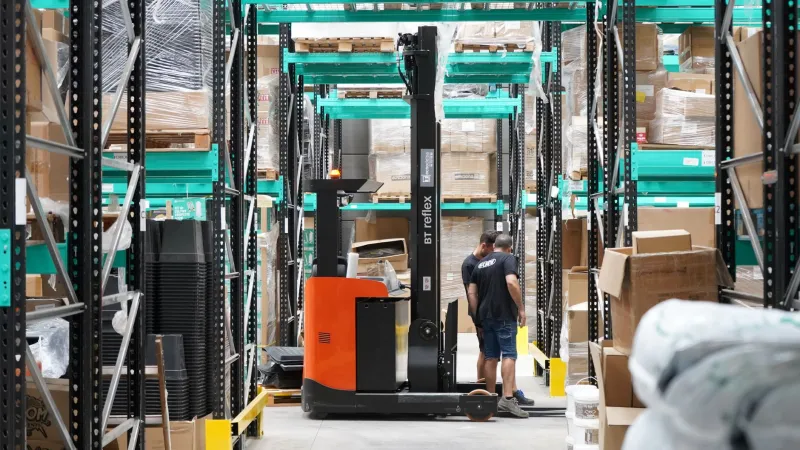
The logic sounds airtight on paper. Labor costs in Market A are 30 percent lower than in your current facility. Real estate is less expensive. Incentive packages from the local economic development authority sweeten the proposal further. The financial model shows a breakeven within eighteen months and meaningful savings thereafter. Leadership approves the move.
Two years later, the savings have not materialized. Order accuracy is down. Dwell time has increased. Customer complaints have risen. And the team that built the operation's institutional knowledge is gone.
This is not an unusual story. It is, in fact, a pattern that repeats itself often enough in logistics and warehousing that it deserves a more rigorous examination than it typically receives.
The Wage-Rate Fallacy in Warehouse Economics
Hourly labor cost is a real number and a legitimate input into any operational model. The problem is that it is frequently treated as if it exists in isolation—as if a worker paid $18 per hour in one market performs identically to a worker paid $14 per hour in another, with the only variable being the wage.
In practice, labor cost per hour and labor cost per accurate, on-time order are very different figures. A facility staffed with experienced workers who understand the product mix, the WMS interface, the carrier pickup windows, and the exceptions handling process will consistently outperform a newly staffed facility on velocity, accuracy, and exception resolution—regardless of the wage differential. The productivity gap between a tenured team and a newly assembled one is rarely modeled in relocation analyses, but it is consistently significant.
Industry data on warehouse labor consistently shows that new-hire ramp-up periods in fulfillment environments run between 60 and 120 days before workers reach full productivity. In high-SKU environments or operations handling fragile or regulated goods, that window can extend further. The cost of operating at reduced throughput during this period—and of the errors generated while the team is still learning—is a real expense that belongs in the relocation model.
Workflow Efficiency Is Not Portable
Every warehouse operation that functions well has developed a set of informal systems layered on top of its formal processes. These include the way receiving exceptions are communicated to inventory control, the shortcuts experienced pickers use to navigate a dense storage layout, the unwritten protocols for handling carrier disputes. None of this is in the standard operating procedures document. Most of it is not written down anywhere.
When an operation relocates—even when it takes key personnel with it—these informal systems do not transfer cleanly. The new facility has a different layout, different adjacencies, different sight lines, and different physical constraints. The workflows that evolved organically in the original space must be rebuilt from scratch in the new one. That rebuilding process takes time, generates errors, and consumes management attention that is not available for other priorities.
The facilities dimension compounds this further. A warehouse in a lower-cost market may offer lower rent per square foot, but if the building's dock configuration, ceiling height, column spacing, or fire suppression system is incompatible with your storage and throughput requirements, the savings evaporate in retrofit costs. Infrastructure compatibility is frequently underweighted in site selection analyses that lead with labor cost comparisons.
Dwell Time: The Hidden Performance Metric That Relocation Disrupts
Dwell time—the duration between when inventory arrives at a facility and when it ships to the next destination—is one of the most consequential metrics in warehouse operations, and one of the least discussed in relocation conversations.
A facility that is well-positioned relative to its inbound suppliers and outbound customers can maintain tight dwell times because transit lanes are short and predictable. When operations move to a market that is geographically or logistically less central, dwell time often increases—not because the team is less capable, but because the facility is simply farther from where goods need to go.
For businesses whose customers expect defined lead times, an increase in dwell time has downstream consequences: expedited shipments to recover schedule, customer service resources consumed by status inquiries, and in some cases, lost accounts. These costs are rarely visible in the original relocation model because they are categorized under customer service or sales rather than operations.
The Outsourcing Version of the Same Problem
The workflow mismatch problem is not unique to geographic relocation. It appears with equal frequency when businesses outsource operations to a third-party logistics provider whose capabilities are not well-matched to the specific requirements of the product category.
A 3PL that excels at high-volume retail replenishment may be poorly configured to handle the irregular order patterns, specialized packaging requirements, and compliance documentation of an industrial or specialty goods shipper. The hourly rate or per-pick fee may look attractive, but if the provider's workflow generates a higher error rate or requires more exception handling, the effective cost per successful shipment is higher than the alternative.
The due diligence process for outsourcing decisions should extend well beyond rate card comparison. It should include an honest assessment of whether the provider's existing workflows, technology stack, and staff capabilities are compatible with the operational profile of the business being transferred.
A More Complete Framework for Location and Outsourcing Decisions
The goal is not to argue against relocation or outsourcing as strategies—both can deliver genuine value when executed thoughtfully. The goal is to expand the analysis beyond the variables that are easiest to quantify.
A more complete evaluation framework includes the following dimensions:
Productivity-adjusted labor cost. Rather than comparing hourly rates, model the expected throughput per labor hour at each location, accounting for ramp-up periods, turnover rates in the local labor market, and the complexity of the operation being transferred.
Workflow compatibility. Assess whether the new facility's physical layout, technology infrastructure, and existing processes are compatible with your operational requirements—or whether significant adaptation will be required.
Dwell time and transit cost impact. Map the new facility's position relative to your primary inbound and outbound lanes and quantify the impact on transit times, carrier costs, and customer lead time commitments.
Knowledge transfer cost. Estimate the cost of rebuilding institutional knowledge: formal training, management time, error rates during the learning curve, and the potential departure of key personnel who choose not to relocate.
Total cost of transition. Include the one-time costs of the move itself—physical relocation, technology reconfiguration, parallel operation periods, and customer communication—alongside the ongoing operational model.
When all of these factors are included, the breakeven timeline typically extends significantly beyond what the initial model projected. In some cases, the savings case disappears entirely.
The Operations That Actually Benefit from Relocation
None of this means relocation is always the wrong answer. For operations that are genuinely constrained by the physical limitations of their current facility, that face labor market tightness with no near-term resolution, or that have outgrown their geographic footprint relative to their customer base, relocation can be the right strategic move. The difference is that these decisions are made for operational reasons—not because a wage comparison looked favorable in a spreadsheet.
At GoPack SA, our perspective is straightforward: smarter shipping and storage means making decisions based on the full cost picture, not the most legible one. The most expensive operational choice is often the one that looked cheapest at the time it was made.