Sent Twice, Paid Twice: A Practical Guide to Cutting the Hidden Costs of Re-Shipments in B2B Operations
In B2B logistics, the cost of a shipment is typically calculated once: the carrier rate, the packaging materials, the labor to pick and pack. What rarely appears in that calculation is the cost of sending the same order a second time.
Re-shipments—whether triggered by address errors, dock rejections, packaging failures, or customer-side mistakes—represent one of the most consistently undertracked expense categories in business-to-business operations. Because the costs are distributed across shipping, customer service, inventory, and sometimes sales, they never appear as a single line item. They are invisible in aggregate, which is why they persist at levels that would be unacceptable if they were visible.
This guide breaks down where re-shipment costs originate, which industries absorb the most damage, and what operational changes can reduce the frequency of re-sends without requiring a significant capital investment.
Why Re-Shipment Costs Are Harder to Track Than They Should Be
The first obstacle to solving a re-shipment problem is recognizing its true scale. Most businesses that track re-shipments do so at the carrier level—a returned shipment generates a tracking event, and someone in logistics notes that it came back. What is rarely captured in that same record is the labor cost of repacking the order, the cost of any damaged goods that cannot be resent, the customer service time spent communicating the delay, and the expedite premium often required to get the replacement shipment to the customer before the relationship is damaged.
When all of these components are aggregated, industry estimates suggest that the fully loaded cost of a re-shipment typically runs between two and four times the cost of the original shipment. For high-weight or freight-classified shipments, the multiplier can be higher. For temperature-sensitive or time-critical goods, the cost of a re-send may include spoilage or contractual penalties that dwarf the carrier charge.
The Five Most Common Causes of B2B Re-Shipments
Understanding the origin of re-shipments is essential to choosing the right remediation. Not all re-sends have the same cause, and solutions that address address verification will do nothing for packaging failures.
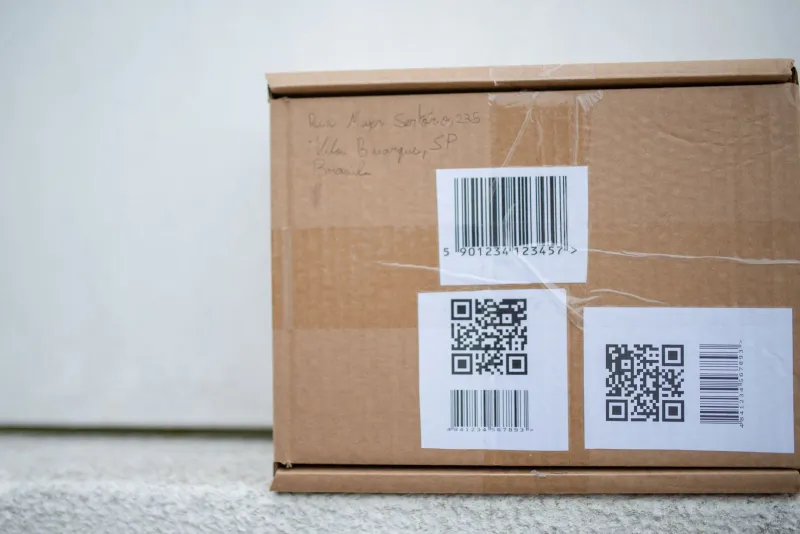
1. Address and routing errors at order entry. In B2B environments, shipping addresses are often entered manually—either by the customer during order placement or by an internal team processing a purchase order. Errors in suite numbers, ZIP codes, dock numbers, or delivery contact information are common, particularly for customers with multiple locations. A shipment routed to a corporate headquarters instead of a regional distribution center may be refused or simply undeliverable.
2. Packaging failures in transit. Packages that arrive damaged are refused at an increasing rate in B2B receiving environments, where dock managers are trained to reject shipments that show signs of damage before accepting liability. If your packaging is not engineered for the specific transit conditions your shipments encounter—drop heights, vibration profiles, stacking pressures—you will generate a predictable stream of damage-related returns.
3. Customer-side rejections for non-conformance. Many B2B buyers have receiving specifications that go beyond basic packaging integrity. These may include labeling requirements, pallet configuration standards, advance shipment notification (ASN) requirements, or documentation that must accompany the delivery. Shipments that do not meet these specifications are rejected at the dock, often with a chargeback attached.
4. Carrier misroutes and hub exceptions. While less within a shipper's direct control, carrier-side errors—misroutes, hub sorting exceptions, and incorrect delivery attempts—generate re-shipment costs that land on the shipper's operation regardless of fault. The frequency of these events is influenced by how clearly shipments are labeled, how accurately the shipment data is transmitted to the carrier, and whether the business has a protocol for rapid exception response.
5. Incorrect order contents. Pick errors that result in the wrong product, wrong quantity, or wrong configuration being shipped generate returns that require not just re-shipment but also inventory reconciliation. In operations without robust pick verification, error rates that seem small on a percentage basis can represent significant absolute costs at volume.
Industries Carrying the Highest Re-Shipment Exposure
While re-shipment costs affect businesses across sectors, certain industries carry disproportionate exposure:
- Industrial distribution and MRO suppliers frequently ship to multiple facility locations for the same customer, creating address routing complexity and a higher incidence of dock-level rejections when delivery specifications are not met.
- Food and beverage distributors face the compounding risk of spoilage on re-sends, meaning a rejected shipment may result in a total loss rather than a delayed delivery.
- Healthcare and pharmaceutical suppliers operate under strict receiving protocols that generate high rejection rates for shipments with documentation gaps or labeling non-conformance.
- Specialty retail and e-commerce fulfillment for B2B accounts often involves retail compliance requirements—specific label formats, master carton configurations, and EDI documentation—that create frequent rejection events for suppliers not fully aligned with buyer standards.
A Practical Checklist for Reducing Re-Shipment Frequency
The following measures are sequenced from lowest implementation cost to higher complexity. Most businesses can begin with the first several items and realize meaningful reduction in re-shipment rates before reaching the more involved interventions.
Implement address verification at order entry. Address standardization tools—many of which integrate directly with common ERP and order management platforms—can flag address anomalies before a shipment is ever picked. This is one of the highest-return, lowest-cost interventions available.
Build a receiving specification library for your top customers. For your 20 highest-volume B2B accounts, document their dock receiving requirements, labeling standards, and ASN expectations. Make this library accessible to your shipping team and update it annually or when a rejection occurs.
Audit your packaging against your actual transit profile. If you are not testing your packaging against the specific drop, vibration, and compression conditions present in your carrier network, you are guessing. ISTA or ASTM packaging test protocols provide a structured framework for validating that your packaging will survive the journey it is actually making.
Establish a re-shipment tracking code in your order management system. Creating a dedicated reason code for re-shipments—separate from standard returns—allows you to capture the true frequency and cost of re-sends as a reportable metric. What gets measured gets managed.
Set up carrier exception alerts. Most major carriers offer proactive exception notification through their shipper portals or API integrations. Enabling these alerts allows your team to intervene on a misrouted or delayed shipment before it becomes a return.
Introduce a secondary verification step for high-value or high-risk orders. For orders above a defined value threshold, or for customers with a documented history of rejections, a secondary review of address, contents, and documentation before release can prevent a disproportionate share of re-shipment events.
Review pick verification processes for your highest-error SKUs. If your WMS data allows you to identify which SKUs or order types generate the most pick errors, targeted process improvements—additional scan steps, visual confirmation prompts, or zone-specific accuracy audits—can reduce error rates without a wholesale system change.
Turning Re-Shipment Data Into a Strategic Asset
The businesses that reduce re-shipment costs most effectively are not necessarily the ones that invest the most in new technology. They are the ones that take re-shipment data seriously as a performance indicator, trace it back to its root causes, and apply targeted fixes at the point of origin.
A re-shipment is not simply a logistics event. It is a signal that something in the order fulfillment chain did not work as intended. Treating it as such—and building the tracking infrastructure to identify patterns—converts a cost center into a diagnostic tool.
At GoPack SA, we believe that smarter shipping starts with understanding where current processes are generating unnecessary expense. Re-shipments are one of the clearest examples of a cost that is entirely preventable once it is properly visible.