The Overflow Trap: Why Reactive Surge Storage Quietly Dismantles Your Operating Margins
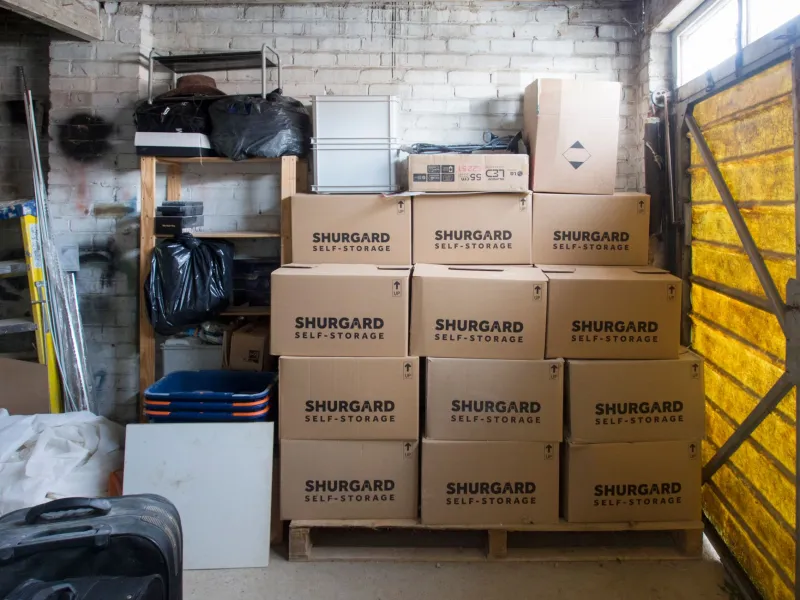
Every operations manager has lived through a version of the same scenario. Demand arrives faster than the forecast predicted. The primary warehouse fills to capacity. Someone in leadership approves a short-term lease on overflow space, or a deal is struck with a local public storage provider, or a corner of a neighboring facility is rented by the month. The immediate problem is solved. The product has a home. Shipments continue.
What does not continue is the clean, integrated operation that existed before the surge. In its place, a fragmented, multi-location system takes root—one that carries costs and complications that rarely appear on the original approval memo.
The Anatomy of a Temporary Fix
Reactive surge storage takes several forms across American businesses. Overflow facilities are perhaps the most common: secondary locations, often operated by third parties, that absorb excess inventory when primary capacity is exhausted. Pop-up warehouse arrangements—short-term leases on vacant industrial space—represent another frequent response, particularly in markets where commercial real estate has softened. Some businesses rely on carrier-held inventory programs, where goods remain in a carrier's possession longer than intended, effectively using the transit network as ad hoc storage.
Each of these arrangements solves the immediate space problem. Each also introduces a set of operational complications that, in aggregate, can cost more than the storage itself.
The Inventory Fragmentation Tax
The most immediate operational consequence of splitting inventory across multiple locations is the degradation of visibility. A warehouse management system calibrated for a single primary facility does not automatically extend accurate, real-time visibility to a hastily added overflow location. The result is a gap between what the system reports and what actually exists on the floor.
That gap generates errors. Orders are allocated against inventory that is in the wrong location to fulfill them efficiently. Cycle counts at the primary facility produce numbers that look correct but exclude overflow stock. Replenishment decisions are made with incomplete information, leading to either excess purchasing or stockouts that could have been avoided.
The labor cost of reconciling fragmented inventory across multiple locations is rarely captured in the approval process for temporary storage. Staff time spent on manual counts, cross-location transfers, and error correction represents real operating expense that accumulates quietly over the life of the temporary arrangement.
Compliance Across Multiple Locations
For businesses operating in regulated product categories—food and beverage, pharmaceuticals, industrial chemicals, or any product subject to state-specific storage requirements—the compliance dimension of temporary storage deserves particular attention.
A primary facility that has been audited, certified, and maintained to specific standards does not automatically confer those standards on an overflow location. Temperature controls, humidity management, pest control protocols, and documentation practices must all be verified and maintained at every facility where regulated inventory is stored. In the urgency of a demand surge, this verification step is frequently abbreviated or deferred.
The consequences of that deferral can be severe. A compliance violation discovered during a regulatory inspection or a customer audit can result in product holds, recall exposure, or the loss of a certification that took years to obtain. The cost of a single such event almost always exceeds the cumulative cost of the temporary storage arrangement that created the exposure.
The Lease Math Nobody Does
Short-term storage leases carry a premium over long-term commitments, as any commercial real estate professional will confirm. In tight industrial markets—which describe most major US logistics corridors at present—that premium can be substantial. Month-to-month arrangements in high-demand markets regularly price at 30 to 50 percent above equivalent long-term lease rates.
Beyond the base rent, there are setup costs that rarely appear in initial estimates: utility connections, security deposits, insurance riders, IT connectivity for inventory systems, and the labor required to establish and later dismantle the location. When these costs are added to the premium lease rate and spread across the actual duration of the arrangement—which typically runs longer than originally planned—the per-square-foot cost of temporary storage frequently exceeds that of purpose-built, professionally managed space.
This math is almost never performed at the moment the decision is made, because the decision is made under pressure. The operational urgency of a demand surge creates a decision environment in which speed takes priority over analysis. The costs that result are then absorbed as overhead rather than attributed to the original storage decision.
The Operational Friction Multiplier
Beyond the direct costs of temporary storage, there is a subtler but equally significant problem: the operational friction that multiple locations introduce into every downstream process.
Order fulfillment that previously required pulling from a single, organized location now requires coordinating across two or more facilities. Inbound receiving must be directed and tracked across multiple addresses. Returns processing becomes more complex when the appropriate destination is no longer obvious. Carrier pickups must be scheduled and managed at multiple locations. Each of these complications adds time, labor, and error risk to processes that were previously routine.
For businesses that rely on tight fulfillment windows—and in B2B commerce, the expectation of reliable, on-time delivery is nearly universal—this friction translates directly into service performance risk. The same demand surge that created the storage problem can also create a fulfillment performance problem if the temporary solution degrades throughput capacity.
A More Deliberate Alternative
The antidote to reactive surge storage is not simply more warehouse space. It is a more deliberate approach to capacity planning that accounts for demand variability before it arrives rather than after.
Businesses that maintain relationships with flexible, professionally managed storage partners—arrangements that can be activated on defined terms rather than negotiated under pressure—consistently manage surge periods at lower total cost than those who respond reactively. The key difference is that the terms, compliance standards, and integration protocols are established in advance, eliminating the setup costs and compliance gaps that characterize emergency arrangements.
Building that kind of planned flexibility into a storage strategy requires acknowledging that demand will, at some point, exceed primary capacity. For most businesses, that acknowledgment is the harder step. The operational planning that follows it is, by comparison, straightforward.